I didn't leave healthcare.
I learned to defend it.
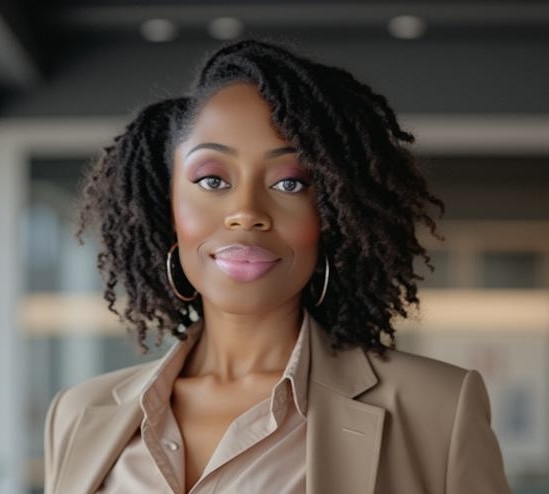
I started on the floor as a CNA and registration clerk, working my way up to Lead ER Tech, Epic Super User, and Clinical Preceptor. Ultimately I served as Clinical Coordinator and Lead Clinical Coordinator — managing nursing staff, physicians, and administrative workflows across ERs and outpatient surgical centers.
Physicians trusted my judgment. I understood how clinical teams think, how hospitals actually operate under pressure, and exactly where the risk lives.
Patient data held hostage. Medical devices weaponized. Clinical workflows paralyzed at the exact moment lives depend on them. So I brought my triage instincts with me.
Today I specialize in medical device and IoMT security, healthcare GRC, and cybersecurity strategy for organizations where the stakes aren't measured in data — they're measured in lives.
Started on the floor. Learned the system from the ground up.
Clinical decision-making under pressure. Zero margin for error.
Managing physicians, nursing staff, and administrative workflows.
Kennesaw State University. Medical device security concentration.
IoMT security, GRC, clinical risk — at enterprise scale.
Midnight in the War Room. Semperis. Global stage.
In the ER and OR, there is no "IT ticket" for a life-critical system failure. You need security that understands the velocity of care. We bridge the gap between technical defense and clinical reality — approaching cyber risk like trauma triage: prioritize what harms patients first, stabilize fast, build defenses that hold under extreme pressure.
Understanding how nurses, techs, and physicians actually interact with connected systems — where workarounds create vulnerabilities, and where security controls must bend to care delivery.
Rapid assessment under pressure translates directly. Identify critical risks, prioritize by patient impact, and mobilize the right response — without slowing clinical operations.
Security architecture built with the end user in mind. Controls clinicians actually follow. Policies that survive the pace of real care environments — not just audit checklists.
Device and system threat modeling in live clinical environments. AI governance for FDA- and audit-facing products.
HIPAA, NIST, SOC 2 alignment without operational disruption. Policy clinicians actually follow.
Ransomware and downtime planning for EHR and device environments. Tabletops that prepare real clinical teams.
The work of defending healthcare systems from ransomware, protecting connected medical devices, and bridging clinical reality with cybersecurity strategy was already underway. Semperis recognized it. Selected as one of 50+ global defenders in their groundbreaking cyberwar documentary — exploring what it truly means to defend critical infrastructure when nation-states attack.
Watch the Trailer →Born from emergency triage principles, the DFR Framework maps clinical emergency response directly onto cybersecurity incident response. It's not a metaphor — it's a methodology. The same instincts that stabilize a crashing patient stabilize a compromised network.
Explore the Lab →Identify what's critical, what's stable, what's failing. Prioritize by patient — and patient safety — impact first.
Stop the bleed. Isolate compromised systems without shutting down care delivery.
Targeted intervention. Evidence-based controls. No unnecessary disruption to clinical operations.
Return to full operation. Build stronger defenses. Document for the next incident.
A live IoMT risk education platform built from clinical experience and lived device dependency. 9 real failure scenarios. A live Healthcare Ransomware Intelligence Tracker. Interactive Decision Mode. Professional and Student Mode. No hypotheticals — every scenario is built from reality.
Explore the Lab →"Behind the Scenes of Midnight in the War Room" — April 2026, with Krista Arndt, moderated by Heather M. Costa (Mayo Clinic)
Last Month in Security · 2024. Healthcare ransomware threat landscape and clinical impact analysis.
2025. Volunteer leadership coordinating scholar badge access across Hacker Summer Camp.
Diana Initiative / BlackGirlsHack · 2025. Selected for professional development recognition.
2024. Selected through competitive grant program for cloud and technology leaders.
Active contributor to medical device and healthcare security research at the annual event.
Selected annually by WiCyS, The Diana Initiative, BlackGirlsHack, WISP, AWS, Women in Cloud, and Dream.org. Each scholarship opened a door. Each room changed the trajectory.
WiCyS 2020 + 2021Diana Initiative 2023 + 2025BlackGirlsHack/SquadCon 2023 + 2024 + 2025Black Hat/WISP 2023 + 2025DEF CON/WISP 2023 + 2024 + 2025Hacker Summer Camp 2023 + 2024 + 2025AWS re:Invent Builder Grant 2024Women in Cloud 2024Dream.org 2023CybSafe / Coding Black Females 2022Golden Key Honor Society 2021I meet mentees where they are — the same way I triaged patients. Assess, stabilize, treat, recover. Whether you're mapping your first cert path, navigating a job search, or just need someone who's been in a field that didn't look like them: you're in the right place.
Three session types available: WiCyS Office Hours (Tue & Thu), 1:1 Mentor Sessions (Mon–Thu), and Saturday Study Hall — open drop-in, no booking needed.
Visit Mentoring Page → Book a Session →Senior healthcare cybersecurity expertise without the overhead of full-time staff. I never left healthcare — I learned to defend it. Remote-first with on-site availability. Engagements structured to integrate cleanly into existing delivery teams and protect clinical operations.
Ready to discuss subcontract availability, advisory support, or a custom engagement? Reach out directly — remote-first, available immediately.
Send an Email →Three ways to connect — office hours, 1:1 sessions, or drop into Saturday Study Hall. No gatekeeping. Just show up.